The question, “Who made God?” sounds profound, but it rests on a misunderstanding of what Christians mean by God as the eternal First Cause.
********
Dear Roger,
I have a good friend who is not a believer and likes to dabble in philosophy. He is very smart and sometimes asks me questions I can’t answer. One of them was, “What is the origin of God?” You said once that you discussed this with someone else. What was your explanation?
The question behind the question
Self-created vs self-existent
The question behind “who made God?” confuses the difference between self-created and self-existent. The first is irrational, and the second is rational.
The question confuses the difference between self-created and self-existent. The first is irrational, and the second is rational.
To suggest that something could create itself violates logic. A thing would have to exist before it existed to create itself. That is a nonsense statement. It contradicts its premise.
It is logically consistent to say that something could exist from all eternity as an uncreated reality. That is not self-creation. In fact, there exists a line of logic that requires it.
The law of causality
Philosophers often refer to this as the First Cause Argument, also called the law of causality. In layman’s terms, it is referred to as cause and effect. This law states that every effect must have a cause, by the very definition of the word effect.
Cause and effect
Further, the cause must be equal to or greater than the effect. If you wish to throw a stone, the force of your arm must be greater than the weight of the stone.
The assumption of sufficient cause is basic to all reality and every aspect of our existence. This reasoning is also foundational to discussions about God’s existence.
If we call into question its absolute validity, then reason, knowledge, science, and anything rational become impossible.
Every effect must have a cause
This, by the way, is not the same as saying ever thing must have a cause, only that every effect must have a cause. Or, every event must have a cause. This again is not the same as saying every thing must have a cause.
Argument for a first cause
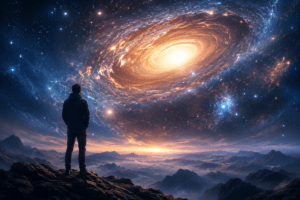 Another way to describe the Argument of First Cause is to say that for anything to be in motion or to change, something must have initiated the change. At some point, the cause of all change and motion must be something that has existed eternally and is therefore unchangeable. There must be a first cause, or nothing could get started. This is sometimes called the uncaused cause.
Moreover, if there were ever a time when nothing existed, not even God, then nothing could exist now. Something must exist from all eternity as the basis of everything else, their motions, and the changes in them and is therefore an uncaused entity.
For a fuller discussion of this issue, see Creation, Conscience and Christ
The necessary being
Why God cannot not exist
This is what theologians mean when they say God is a necessary being. They mean he cannot NOT exist. Without a first cause, there can be no secondary causes. If this line of logic is invalid, then so is all knowledge.
Attributes of the first cause
Eternal
Since the First Cause must be equal to or superior to its most obvious effect, the universe, it follows that it must have certain attributes. First, it must be eternal, as shown above.
Omnipotent
Second, it must be infinitely powerful because the energy for the creation of the universe has no other source but itself.
Omnipresent
Third, it must be omnipresent, for we live in a universe billions of light-years in diameter.
Transcendent
It must be infinite in all respects, or else its energy would eventually be depleted. From this alone we deduce the three incommunicable attributes: omnipotent, omniscient, and omnipresent.
This conclusion also leads to the view that the First Cause must have a quality and kind of existence infinitely different from any created thing, which is why the question who made God ultimately rests on a false assumption. We call that transcendence. If the First Cause is not God, then what else could it be?
I hope this helps your friend.
###
Free books, essays and study guides
Related articles:
Christian Apologetics for Kids: teaching children biblical truth
Many Paths to God? A Christian Response
If you liked this article, you may enjoy our book,
Creation, Conscience, and Christ: The three C’s of biblical apologetics.